Subscription fatigue is real and measurable, but it is not killing the streaming boom—it is fundamentally reshaping it. The streaming video market continues its expansion trajectory, projected to grow from $192.8 billion in 2025 to $356.2 billion by 2031 at a robust 10.85% compound annual growth rate. However, this growth masks a critical inflection point: the industry has shifted from acquisition-driven expansion to profitability-driven consolidation, with survival now determined by operational efficiency rather than subscriber velocity. Consumer fatigue is forcing platforms to abandon the unprofitable growth-at-all-costs model that defined streaming’s first decade and adopt disciplined, value-focused strategies centered on ad monetization, bundling, and platform integration.
The data reveals a paradox. While 91% of U.S. internet households subscribe to at least one streaming service and consumers spend 3 hours and 9 minutes daily on streaming content, 66% report subscription fatigue and 37% of Gen Z have actively canceled subscriptions due to cost and complexity. Simultaneously, streaming has achieved an unprecedented scale: Netflix alone surpassed traditional media incumbents in profitability, generating $12.7 billion in net income in 2025—exceeding The Walt Disney Company by approximately $700 million despite having less than half Disney’s total revenues.
This report examines whether subscription fatigue is fatal to the industry or simply a market correction that separates winners from losers.
The Scale of Subscription Fatigue
Consumer Prevalence and Intensity
Subscription fatigue has evolved from fringe concern to mainstream behavioral driver. Research reveals that 41% of consumers experience subscription fatigue, with 60.4% avoiding new subscriptions due to cancellation friction. Among Gen Z—the cohort most digital-native—the pattern is acute: 37% have canceled at least one streaming subscription explicitly due to fatigue, and another 29% have not yet canceled but plan to soon. Only 13% of Gen Z report feeling no fatigue whatsoever.
The psychological toll extends beyond simple cost-benefit analysis. Consumers report experiencing anxiety, guilt, and frustration when managing multiple recurring payments. This emotional dimension explains why many users remain paying subscribers despite acknowledging poor value—switching costs (both cognitive and habitual) keep them locked in, even as satisfaction erodes.
The Price Inflation Problem
The industry confronts a fundamental contradiction: streamers have raised prices dramatically while consumer purchasing power has stagnated. In December 2025, the Bureau of Labor Statistics reported that subscription video services experienced 19.5% inflation—seven times the overall inflation rate of 2.7%. This “streamflation” reflects a deliberate industry strategy: as subscriber acquisition has plateaued and content costs remain inflated from bidding wars, platforms have shifted to aggressive pricing on existing customers.
The pricing squeeze is evident in household budgets. The average U.S. household now spends $61 per month ($552 annually) on streaming subscriptions alone, approaching the cost of traditional cable television, which streaming was meant to displace. Half of all streaming consumers report they have canceled subscriptions due to rising prices, and 44% explicitly cited price hikes within the past 12 months as their reason.
Saturation and Fragmentation
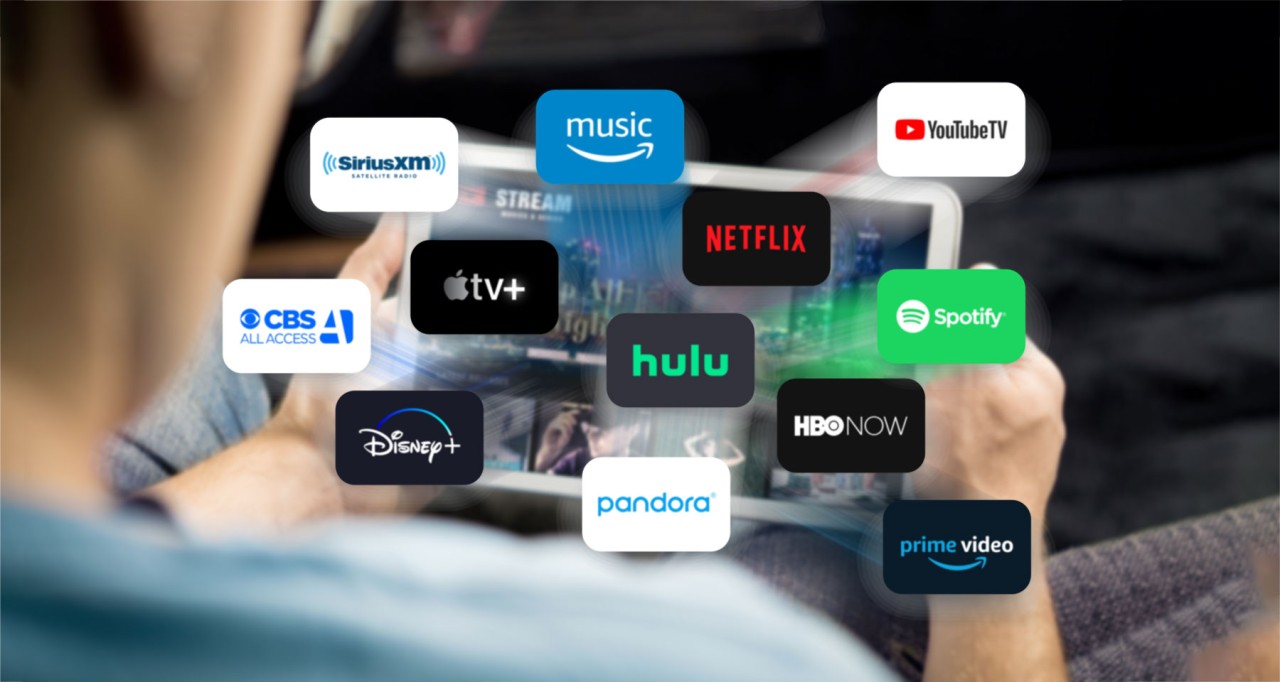
A critical driver of fatigue is not fatigue from cost alone, but fatigue from fragmentation. Consumers average 2.9 to 4 streaming subscriptions per household, yet no single service offers comprehensive content. The proliferation of platforms—Netflix, Disney+, Hulu, Amazon Prime Video, Paramount+, Peacock, Apple TV+, Max, Roku Channel, Tubi, and dozens of niche services—forces viewers into a non-linear calculus: monthly cost versus likelihood of finding desired content across multiple apps.
This fragmentation exploded content accessibility initially. However, it has now become a liability. When exclusive licensing agreements scattered beloved franchises across incompatible ecosystems, the convenience proposition of streaming—”all content in one place”—collapsed. Consumers now must either pay for numerous subscriptions or accept missing out on available content, generating what researchers identify as “decision fatigue” and “FOMO anxiety.”
Market Performance: Growth Persists, But Dynamics Shift
Market Expansion and Ad-Driven Revenue
Despite fatigue signals, the streaming video market shows no signs of contraction. The market reached $212.83 billion in 2026 and is projected to reach $356.2 billion by 2031. This growth trajectory, while healthy, represents a material deceleration from the pandemic-era boom when compound annual growth rates approached 25-30%.
The real growth engine has shifted from subscription revenues to advertising. Streaming advertising revenue grew 18% year-over-year in Q3 2025, reaching $3.8 billion quarterly. Netflix’s advertising business alone more than doubled from 2024 to 2025, reaching $1.5 billion and commanding expectations to double again to $3 billion in 2026. This shift signals industry maturation: platforms are compensating for subscription saturation by monetizing attention rather than chasing subscriber volume.
Subscriber Plateau and Consolidation
Subscriber growth has entered a new regime. In Q2 2025, the industry achieved only 6 million net new subscribers—a fraction of historical additions. Netflix achieved 325 million global subscribers by late 2025, representing growth of only 6% from the previous year. Digital TV Research projects that by 2026, Netflix will hold 270.7 million subscribers while Disney+ reaches 284.2 million. These projections signal near-equilibrium: the subscriber wars are ending as markets saturate in developed regions.
The consequence is a shift toward consolidation and integration rather than green-field expansion. Disney has integrated Hulu content into Disney+, aiming to reduce operational redundancy and capture greater share-of-wallet. Netflix and Warner Bros. entertained merger discussions, signaling that companies recognize combining forces—rather than competing for the same finite pool of customers—as the path to scalable dominance.
Subscriber growth has entered a new regime. In Q2 2025, the industry achieved only 6 million net new subscribers—a fraction of historical additions. Netflix achieved 325 million global subscribers by late 2025, representing growth of only 6% from the previous year. Digital TV Research projects that by 2026, Netflix will hold 270.7 million subscribers while Disney+ reaches 284.2 million. These projections signal near-equilibrium: the subscriber wars are ending as markets saturate in developed regions.
The consequence is a shift toward consolidation and integration rather than green-field expansion. Disney has integrated Hulu content into Disney+, aiming to reduce operational redundancy and capture greater share-of-wallet. Netflix and Warner Bros. entertained merger discussions, signaling that companies recognize combining forces—rather than competing for the same finite pool of customers—as the path to scalable dominance.
Profitability as the New Battleground
The most striking development is that streaming has become deeply profitable—but only for the disciplined players. Netflix achieved approximately 30% operating margins in 2025, generating $13.5 billion in operating income on $45.1 billion in revenue. Netflix’s net income before taxes surpassed the entire Walt Disney Company in 2025 by nearly $700 million, despite generating less than half of Disney’s total revenue. This performance reflects Netflix’s ruthless focus on unit economics: it cracked down on password sharing (converting ~50 million freeloaders into paying subscribers), embraced ad-supported tiers, and maintained disciplined content spending tied to subscriber lifetime value.
Disney’s Direct-to-Consumer segment, conversely, generated only $1.3 billion in operating income in 2025 despite managing 124.6 million Disney+ subscribers. This gap reflects Disney’s more complex operational structure, higher content costs (driven by legacy IP obligations), and slower shift toward profitability-focused models. For Disney, streaming is one business among many; for Netflix, it is the entire enterprise.
Industry Response Strategies: Adaptation, Not Collapse
Ad-Supported Tiers as Fatigue Release Valve
Streaming platforms have responded to fatigue not by lowering prices, but by offering lower-cost, ad-supported alternatives. This strategy addresses two problems simultaneously: it captures price-sensitive customers who would otherwise churn, and it generates incremental advertising revenue.
The adoption metrics are striking. Netflix’s ad-supported tier reached 94 million global users by May 2025, representing over one-third of net new sign-ups in some quarters. Disney+ reports approximately 30% of its 124.6 million subscribers are on ad-supported plans. This migration is not cannibalization but conversion: research indicates 65% of streaming consumers prefer ad-supported tiers to premium pricing, suggesting a permanent structural shift in consumer preferences.
Bundling: The Return of “Cable”-like Packaging
Facing churn, platforms are deploying bundling strategies that paradoxically mirror the cable TV model they sought to displace. Disney offers Disney+, Hulu, and ESPN+ bundled for $10.99 per month—a 44% discount versus purchasing individually. This strategy works because it addresses two pain points: cost and complexity. Consumers prefer a single payment for a curated bundle over managing three separate subscriptions.
Bundling is reshaping the competitive landscape. In Q2 2025, bundled offerings captured disproportionate subscriber share, with Disney+ integrating Hulu content into a unified platform. Analyst Alan Wolk noted, “The market is very much in flux, with some people leaving and some people coming in, depending on what they want to watch.” This observation captures the reality: bundling is driving subscriber rotation, not net growth. Consumers are switching between bundles rather than adding net new subscriptions, indicating a stabilization of the market around fewer, larger players.
Free Ad-Supported Streaming TV (FAST) Services
An underestimated dynamic is the rise of free ad-supported streaming services. Parks Associates found that 45% of U.S. households now tune into FAST services, up from 42% a year prior. These services—including Tubi, Roku Channel, Pluto TV, and others—offer ad-interrupted content at no cost, directly competing for time and attention with paid subscriptions.
FAST services are growing at 14.7% CAGR, substantially faster than subscription video-on-demand (SVOD). For budget-conscious consumers experiencing fatigue, FAST channels provide a sustainable alternative to managing expensive subscriptions. This creates a three-tier market: premium ad-free subscriptions (for content enthusiasts), ad-supported subscriptions (for cost-conscious consumers), and free FAST services (for the price-sensitive mass market).
Consumer Behavior Realignment
Paradox of Penetration and Loyalty
The streaming market exhibits a paradox: unprecedented penetration coupled with eroding loyalty. Nine-in-ten U.S. internet households subscribe to at least one streaming service, yet simultaneously, subscriber churn rates have accelerated and loyalty metrics have weakened. Seventy-two percent of consumers report satisfaction with their streaming experience, yet 93% say they are planning to keep or increase their subscriptions—a disconnect that reflects resignation rather than enthusiasm.
This paradox reflects a commoditization dynamic: streaming has transitioned from a scarce good (in 2015-2018, Netflix was premium) to an undifferentiated utility (in 2025, streaming is ubiquitous and interchangeable). Consumers maintain subscriptions out of habit or sunk-cost fallacy, not out of passionate attachment.
Generational Divides in Response
Gen Z and Millennials show the highest subscription rotation rates, with 60% preferring bundled services. This reflects both economic constraints (younger cohorts have lower incomes) and digital sophistication (they more readily switch services and cancel subscriptions). In contrast, Gen X and Baby Boomers show lower engagement with bundling (50% and 35% respectively), suggesting less price sensitivity and fewer switching behaviors.
This generational divide has strategic implications. As Gen Z matures into higher-income earning years, they will likely maintain their preference for value-oriented, lower-cost options rather than upgrading to premium tiers. The cohort most likely to drive future churn is also least likely to become high-lifetime-value customers.
The Ad-Acceptance Shift
Perhaps the most significant behavioral shift is growing consumer acceptance of advertising. Historically, ad-free content was a premium differentiator. Today, 59% of subscribers on ad-supported basic tiers report they are comfortable with this arrangement. This normalization reflects both economic pressure and changing expectations: consumers increasingly view advertising as an acceptable trade-off for lower costs, particularly on mobile-first and secondary viewing.
Regional and Global Dimensions
Latin America: Growth Laboratory
Latin America provides insight into how subscription fatigue plays out in emerging markets with different economic dynamics. The region is one of the fastest-growing media markets globally, with revenues forecast to reach $65 billion in 2026—a 10.7% year-over-year increase. Netflix dominates with approximately 50% of regional streaming revenues, benefiting from its ad-supported tier rollout and bundling strategies.
Notably, Mexico and Brazil are among the world’s heaviest users of FAST services, with adoption at 53% and 40% respectively. This suggests that in markets with lower average household incomes, the shift away from expensive subscriptions toward free alternatives is even more pronounced than in North America. For a Peru-based digital entrepreneur, this pattern signals that the market for premium streaming services may have already peaked in Latin America, with growth opportunities concentrated in ad-supported and free alternatives.
Asia-Pacific and High-Growth Markets
Asia-Pacific is expanding at the fastest rate, with a projected 16.8% CAGR through 2031. However, this growth is driven by localized content strategies, mobile-first consumption, and lower per-capita subscription costs than Western markets. The rise of “microdramas”—vertically formatted, mobile-native short-form content—is generating $14 billion in projected revenue by 2026, with $3 billion from outside China. These formats compete directly with long-form streaming, offering higher engagement per minute than traditional series and representing a new category of media consumption.
The Verdict: Fatigue Is Real, But the Boom Evolves Rather Than Collapses
What Subscription Fatigue Is Not Doing
Subscription fatigue is not killing the streaming boom. The market is growing, profitability is increasing, and consumer adoption remains near-universal in developed markets. What fatigue is doing is ending a specific era: the era of unsustainable growth through subscriber acquisition, low pricing, and content spending uncoupled from unit economics.
What Subscription Fatigue Is Doing
Subscription fatigue is restructuring the industry according to three principles:
1. Consolidation Over Fragmentation. The era of 20+ viable streaming platforms is ending. Winners are those with the scale, content libraries, and operational discipline to integrate services (Disney+/Hulu), achieve profitability at scale (Netflix), or occupy niche categories (Apple TV+ as a services bundle sweetener, Paramount+ as legacy media’s survivor). Losers are mid-tier platforms lacking differentiation or scale.
2. Profitability Over Growth. The industry has moved from prioritizing subscriber acquisition to maximizing revenue per subscriber through ad monetization, bundling, and premium feature pricing (4K, multiple streams, offline downloads). Netflix’s path to 30% operating margins demonstrates this model’s viability.
3. Segmentation Over One-Size-Fits-All. The market is bifurcating into premium (ad-free, exclusive content), mid-tier (ad-supported subscriptions, bundles), and free (FAST channels). This mirrors the historical pay-TV landscape, which suggests streaming has not disrupted the fundamental economics of content distribution but merely modernized the delivery mechanism.
Implications for the Industry
For platforms, the path forward requires ruthless discipline: content spending must be tied to subscriber lifetime value, ad technology must be scaled to compensate for subscription saturation, and bundling must be deployed not as a stopgap but as a core business model.
For consumers, fatigue will likely persist until industry consolidation produces 3-4 major bundles (rather than the current 10-12 major services) that cover most viewing preferences. At that point, subscription fatigue may plateau—not because costs fall, but because consumers accept bundled streaming as a category expense, similar to internet or electricity.
For investors, the implication is clear: the streaming boom is not ending, but it has entered a mature phase. Growth will be 10-15% annually rather than 25-30%; profitability will be the measure of success; and valuation multiples will compress toward traditional media levels. Netflix’s emergence as more profitable than Disney signals that focused, efficient streaming operations command premium valuations in a mature market.
Conclusion
Subscription fatigue is a real phenomenon affecting consumer behavior, but it is not killing the streaming boom—it is maturing it. The industry is transitioning from a growth-at-all-costs model to a disciplined, profitability-focused model with clear winners (Netflix, Disney’s bundled offerings) and losers (mid-tier undifferentiated services). Consumer adoption remains near-universal in developed markets, global market size continues expanding at double-digit rates, and profitability is accelerating for disciplined operators.
The question is not whether streaming survives, but which business models and platforms survive. Fatigue will continue to drive churn among price-sensitive consumers and motivate rotation toward cheaper ad-supported and bundled options. However, this is not collapse—it is normalization. Streaming is becoming, paradoxically, more like the cable TV it displaced: a segmented market with premium, standard, and budget tiers, where consumers choose based on their economic constraints and content preferences, and where platform profitability matters more than subscriber velocity.
For the streaming industry in 2026, the boom is not dying. It is maturing.