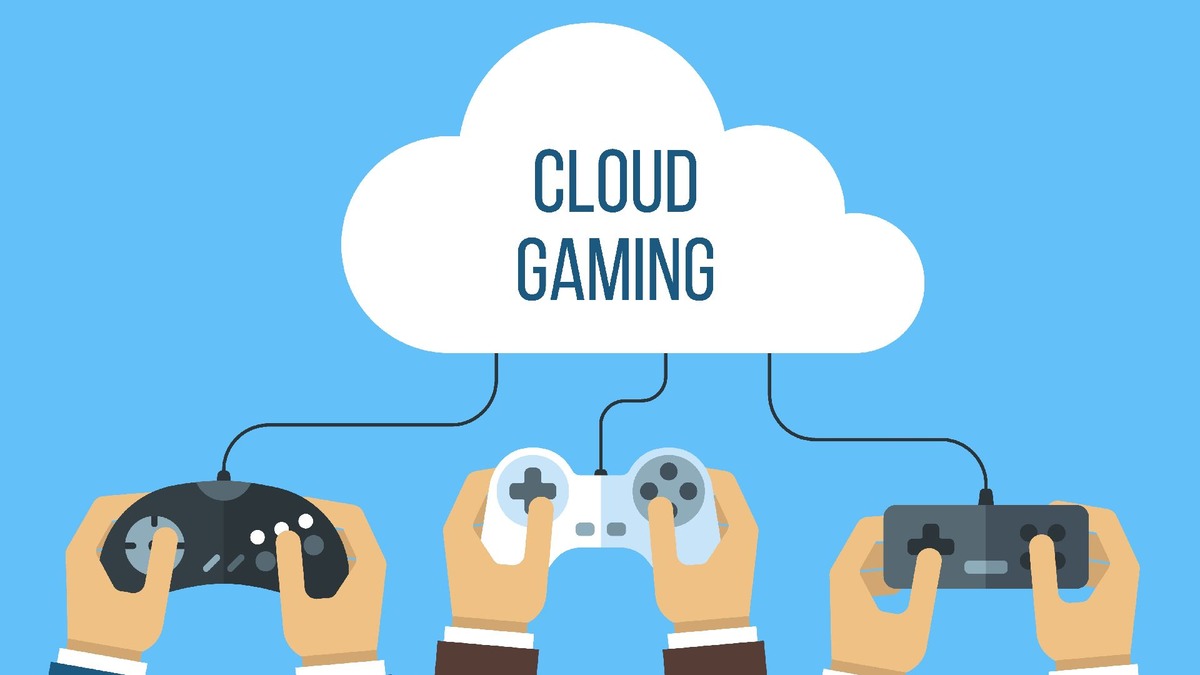
Cloud gaming stands at an inflection point. After years of technological refinement, infrastructure investment, and market skepticism, 2026 marks the threshold where streaming games transition from niche experiment to mainstream reality. This report analyzes the convergence of technological maturity, market forces, and business model disruption that will fundamentally reshape how people play—and why this shift is now irreversible.
The cloud gaming market has entered explosive growth phase. The global market expanded from $3.3 billion to approximately $6.2 billion between 2025 and 2026, with compound annual growth rates ranging from 21% to 43% depending on market analysis. Most significantly, projections converge on the market reaching $20–$160 billion by 2031–2034, representing not incremental expansion but rather a structural reorganization of how games are consumed.
This trajectory mirrors the pattern established by video streaming, where Netflix systematized an entirely new consumption paradigm. The cloud gaming market penetration is expected to surge from the current 2% of global gaming to nearly 30% by 2029, with a notable shift emerging toward 15% adoption by 2025. More tellingly, Asia Pacific now commands 46% of global cloud gaming market share, driven by mobile-first markets and massive young populations, while North America maintains 43% share with a 44% compound annual growth rate—rates that far exceed traditional gaming segments.
The Latency Problem—Solved
The fundamental barrier to cloud gaming credibility—latency—is no longer the limiting factor. For years, input lag relegated cloud gaming to “interesting experiment” status. Current-generation console gaming operates at 100–150ms end-to-end latency, a threshold gamers have accepted as normal. Cloud gaming platforms can now deliver 20–40ms latency, representing a 2–3x improvement over console experiences when leveraging high-performance server hardware running at 60+ frame rates.
Advanced implementations push further. ZGaming, a research-backed cloud gaming system using predictive image rendering, achieves near-zero interactive latency by predicting player inputs before they register—essentially eliminating perceptible delay entirely. While such bleeding-edge solutions remain in optimization phases, the principle is established: latency is no longer a physics problem but an infrastructure engineering problem.
The real-world latency breakthrough stems from three converging technologies. First, edge computing decentralizes processing by placing data centers within metropolitan areas rather than distant continental facilities, reducing data travel time from hundreds of milliseconds to 20–30ms. Second, 5G network deployment in developed markets provides 1ms network switching and guaranteed bandwidth for mobile devices, making handheld cloud gaming viable for the first time. Third, AI-driven latency prediction trains machine learning models to forecast player inputs 50–100ms ahead of execution, effectively “pre-loading” server responses before players act.
For competitive players, the implications are profound. Esports-tier latency standards (sub-50ms) are now achievable across cloud platforms, opening professional gaming to cloud-native competition architectures. This technological parity removes the last credibility barrier between local and cloud gaming.
Infrastructure Demands and Bandwidth Economics
Cloud gaming imposes substantial infrastructure requirements that align precisely with global 5G expansion and fiber-optic deployment. The bandwidth tiers demanded scale directly with visual quality:
- 720p streaming: 5–10 Mbps
- 1080p streaming: 15–25 Mbps
- 4K streaming: 35–50+ Mbps
A single hour of 4K cloud gaming consumes 5–20 GB of data depending on compression efficiency and frame rates. These demands create a chicken-and-egg dynamic: cloud gaming adoption accelerates where fiber and 5G infrastructure is dense, which then justifies further telecom investment in gaming-optimized infrastructure.
Cloud gaming imposes substantial infrastructure requirements that align precisely with global 5G expansion and fiber-optic deployment. The bandwidth tiers demanded scale directly with visual quality:
- 720p streaming: 5–10 Mbps
- 1080p streaming: 15–25 Mbps
- 4K streaming: 35–50+ Mbps
A single hour of 4K cloud gaming consumes 5–20 GB of data depending on compression efficiency and frame rates. These demands create a chicken-and-egg dynamic: cloud gaming adoption accelerates where fiber and 5G infrastructure is dense, which then justifies further telecom investment in gaming-optimized infrastructure.
Cloud gaming imposes substantial infrastructure requirements that align precisely with global 5G expansion and fiber-optic deployment. The bandwidth tiers demanded scale directly with visual quality:
- 720p streaming: 5–10 Mbps
- 1080p streaming: 15–25 Mbps
- 4K streaming: 35–50+ Mbps
A single hour of 4K cloud gaming consumes 5–20 GB of data depending on compression efficiency and frame rates. These demands create a chicken-and-egg dynamic: cloud gaming adoption accelerates where fiber and 5G infrastructure is dense, which then justifies further telecom investment in gaming-optimized infrastructure.
Publisher Business Model Disruption
Game publishers are experiencing a paradigm shift more fundamental than any technological change. The traditional model—develop game, publish physical/digital copies, earn revenue through unit sales—is being replaced by a hybrid ecosystem combining subscriptions, dynamic distribution, and platform exclusivity renegotiation.
From Unit Sales to Subscription Royalties
Publishers historically earned revenue through direct game sales to consumers. Cloud platforms invert this model. Rather than licensing titles to platforms like Xbox Game Pass or PlayStation Plus Premium for flat fees, forward-thinking publishers are negotiating subscription revenue-sharing arrangements where compensation scales with engagement metrics and player time. This aligns publisher incentives with long-term player retention rather than launch-day sales spikes, fundamentally changing game design philosophy.
Instant Distribution and Real-Time Iteration
A critical advantage emerges from cloud infrastructure: games deploy live across the entire player base simultaneously. Traditional platforms require platform certification, staged rollouts, and player downloads. Cloud gaming eliminates all friction. Developers push patches, balance changes, and seasonal content live within minutes, observable immediately by 100% of the player base. This capability enables live-service models previously impossible on traditional hardware, where client-side patching created adoption delays and fragmentation.
Multiplatform Strategy and Exclusive Erosion
Historically, exclusive content was the primary differentiator between console ecosystems. Publishers released franchises on PlayStation OR Xbox, forcing hardware purchases to access desired games. This exclusivity model is eroding. Square Enix announced a strategic shift toward aggressive multiplatform release strategies in 2024, moving beyond PlayStation-exclusive development. Major publishers are signaling similar trajectories, treating cloud as a distribution channel rather than a walled garden, thereby maximizing addressable markets and justifying escalating development costs.
The implications are structural: console manufacturers can no longer leverage exclusive content as the primary competitive moat. Instead, competition centers on subscription library depth, cross-platform ecosystems, and community features. This fundamentally weakens the traditional console business model’s defensibility.
The Hardware Manufacturer Paradox
An apparent contradiction defines 2026: even as cloud gaming threatens to obsolete dedicated gaming hardware, traditional hardware manufacturers are investing billions in cloud infrastructure and cloud-compatible devices.
Console sales have remained flat in penetration (despite absolute dollar growth) for over a decade, even as the global gaming population expanded dramatically. This divergence signals structural weakness in the traditional model. Microsoft, Sony, and Nintendo recognize this and are responding not with resistance but with hybrid strategies.
Microsoft has positioned Xbox Game Pass as a cloud-inclusive subscription that functions across devices, leveraging Azure’s global data center infrastructure to make cloud gaming a feature rather than an afterthought. Sony acquired cloud gaming capability through Gaikai but has deployed it conservatively, restricting PlayStation Plus Premium cloud features to players who own PS5 hardware—a deliberate choice that maintains console sales dependency but sacrifices addressable market size. Nintendo adopted a different strategy: the Switch 2 integrates cloud gaming as a native feature while maintaining local processing capability, creating hybrid versatility that appeals to both console traditionalists and cloud-first players.
These strategies reveal an industry recognizing that cloud gaming will not eliminate hardware but will redefine its role. Future consoles will function as premium local-processing devices for players who value graphics fidelity or internet unreliability mitigation, while cloud becomes the default access method for mainstream audiences. PlayStation 6 and beyond will likely include handheld capabilities precisely because this ecosystem flexibility preserves relevance across consumer segments.
Technology Infrastructure Convergence
Three technological forces are converging to unlock cloud gaming at scale: AI-driven infrastructure optimization, edge computing expansion, and 5G deployment.
AI Infrastructure Orchestration
Cloud gaming demands unprecedented infrastructure efficiency. A single poorly optimized server session consumes disproportionate GPU and bandwidth resources, directly impacting provider margins. AI systems now autonomously optimize resource allocation, predict demand spikes, and route gameplay sessions to the most cost-effective regional data centers in real-time. Predictive scaling analyzes historical usage patterns and network congestion to preemptively allocate capacity before player demand manifests, reducing latency during peak hours.
Edge Computing Decentralization
Traditional cloud gaming routed all processing through centralized data centers, creating latency penalties proportional to geographical distance. Edge computing inverts this architecture. Metro-level edge data centers, often colocated within telecom infrastructure, place gaming servers within 20–50km of players, reducing round-trip latency to 10–20ms. Combined with 5G’s ultra-low latency guarantees, this decentralization enables competitive parity across geographies—eliminating the historical advantage enjoyed by players in proximity to major data centers.
5G Enablement and Bandwidth Evolution
5G deployment across North America, Europe, and Asia has moved from hypothetical to operational. The technology’s low latency (1ms network switching) and high throughput (100+ Mbps in many urban areas) creates the network substrate cloud gaming requires. Mobile cloud gaming revenue is projected to grow at 35% annually as telecom operators bundle gaming services with data plans, recognizing cloud gaming as a high-margin service category.
Market Consolidation and Competitive Positioning
The cloud gaming market is consolidating around ecosystem platforms rather than individual services. Microsoft emerges as the strongest positioned competitor, having bet comprehensively on Game Pass cloud integration, Azure data center global distribution, and aggressive first-party game development subsidies. NVIDIA maintains competitive viability through GeForce NOW, targeting enthusiast gamers willing to pay premium prices for RTX-tier performance, while leveraging publisher partnerships to expand game library breadth.
Sony’s strategy, while competitively defensive, reflects hesitation about cannibalizing console hardware revenue. Amazon Luna, though integrated with Twitch for social streaming, lacks the first-party exclusive content and aggressive pricing that would drive mass-market adoption. Google’s Stadia rebranding and pivot suggests learning from earlier market-timing missteps, repositioning cloud gaming as complementary to rather than replacement for traditional platforms.
Consumer Adoption Dynamics
Adoption is not distributed uniformly across gamer demographics. Casual gamers—now 53% of the cloud gaming market—represent the primary adoption driver. These players value convenience and cost over graphical fidelity, making cloud gaming’s accessibility without hardware investment deeply appealing. Surveys reveal the primary motivations for cloud migration: flexibility (46%), gameplay quality (42%), game library breadth (35%), and cost (32%).
Conversely, 90% of surveyed gamers desire consolidation to a single gaming marketplace rather than managing dispersed libraries across Steam, Epic, Origin, and subscriptions services. This consolidation desire creates an opportunity for cloud platforms to become the unified ecosystem that resolves fragmentation—but only if commercial models align with player preferences. Current pricing structures, where cloud gaming typically requires premium subscription tiers (Game Pass Ultimate, PlayStation Plus Premium), create friction rather than consolidation.
Emerging market consumers exhibit distinctly different adoption curves. In Latin America, Southeast Asia, and South Asia, the zero-hardware barrier is transformative. Cloud gaming enables first-time access to AAA gaming experiences without console purchases, effectively leapfrogging the entire console cycle infrastructure that developed markets required over the past two decades. This represents an addressable market of hundreds of millions of players previously excluded by hardware cost barriers.
Monetization Model Evolution and Revenue Diversification
The pure subscription model—flat-fee monthly access to large game libraries—is being supplemented by hybrid revenue streams that cloud infrastructure uniquely enables.
Subscription remains the dominant model, with 60%+ of gamers preferring recurring access over ownership, driven by convenience and the Netflix-style psychology of unlimited choice. However, emerging models include pay-as-you-go microtransactions, hybrid ownership-subscription bundles where players purchase and “save” games to cloud profiles, and NFT-based asset ownership systems that create persistent digital ownership across games and accounts.
Most significant is the shift toward engagement-based monetization rather than install-based. When publishers can measure exactly how many hours players spend in specific games, when they transition between titles, and what content drives engagement, monetization strategies shift from “maximize day-one sales” to “maximize lifetime player value.” This enables dynamic pricing, personalized discounts, and content recommendations that are simply impossible with traditional distribution models.
Remaining Friction Points and Market Constraints
Despite technological breakthroughs and favorable market dynamics, significant barriers remain to cloud gaming’s complete market transition.
Internet Infrastructure Inequality
Approximately 30% of potential cloud gaming users report dissatisfaction with streaming quality during peak hours, concentrated in geographies with underdeveloped broadband infrastructure. While 5G deployment accelerates, vast populations in Africa, rural South Asia, and parts of Latin America lack the fiber or cellular infrastructure cloud gaming assumes. This creates a bifurcated market where cloud gaming drives rapid penetration in developed and emerging urban centers, while rural and developing regions remain reliant on traditional hardware or mobile-first gaming indefinitely.
Data Cap Economics
Internet service providers in several regions impose data caps that render cloud gaming prohibitively expensive. A player consuming 15 GB monthly (typical for 4K gaming at 20 hours/month) faces overage charges in markets with restrictive policies. Industry negotiations between cloud gaming platforms and ISPs are ongoing, but resolution remains uncertain, creating regional adoption barriers.
Licensing and Content Fragmentation
Game publishers impose restrictive licensing terms for cloud distribution, often implementing regional restrictions or time-limited cloud availability. These licensing complexities slow global platform expansion and create operational costs that reduce provider margins. Some publishers maintain cloud exclusivity windows to protect physical sales in specific regions, fragmenting the seamless global experience cloud gaming theoretically enables.
Consumer Psychological Resistance
Despite convenience advantages, a segment of gamers remains psychologically resistant to pure cloud subscription models, preferring ownership of purchased content. This preference disproportionately affects enthusiast gamers with willingness to pay premiums for graphical fidelity and ownership certainty, potentially limiting cloud gaming’s addressable market ceiling.
Strategic Implications and Conclusion
Cloud gaming represents a structural inflection point in how digital entertainment is produced, distributed, monetized, and consumed. The technology is no longer the constraint—latency is solved, bandwidth is sufficient, and infrastructure is being deployed at scale. The remaining variable is adoption, which is accelerating.
Publishers will migrate toward cloud-native game design, abandoning hardware-specific optimization in favor of cloud-first architectures that leverage server-side processing for complex simulations and endless-world generation. Traditional hardware manufacturers will transition from entertainment monopolists to component providers within broader cloud ecosystems. Telecom providers will evolve from connectivity vendors to gaming infrastructure operators, bundling cloud gaming with 5G services.
For players, cloud gaming eliminates the artificial scarcity imposed by hardware cost and creates genuine consumer choice. A teenager in rural Brazil, a startup founder in Southeast Asia, and a professional gamer in South Korea will access identical AAA gaming experiences through smartphones or low-cost devices—a democratization of gaming comparable to how broadband democratized digital content consumption.
The transition will not be instantaneous or universal. Emerging markets will lead adoption due to hardware cost barriers; developed markets will see gradual cannibalization of console and PC hardware sales over 5–7 years; enterprise and competitive esports will remain locally hosted for control and latency guarantees. But the trajectory is irreversible. Cloud gaming is not about to change how we play—it is fundamentally redefining what “playing games” means as a global consumer behavior.