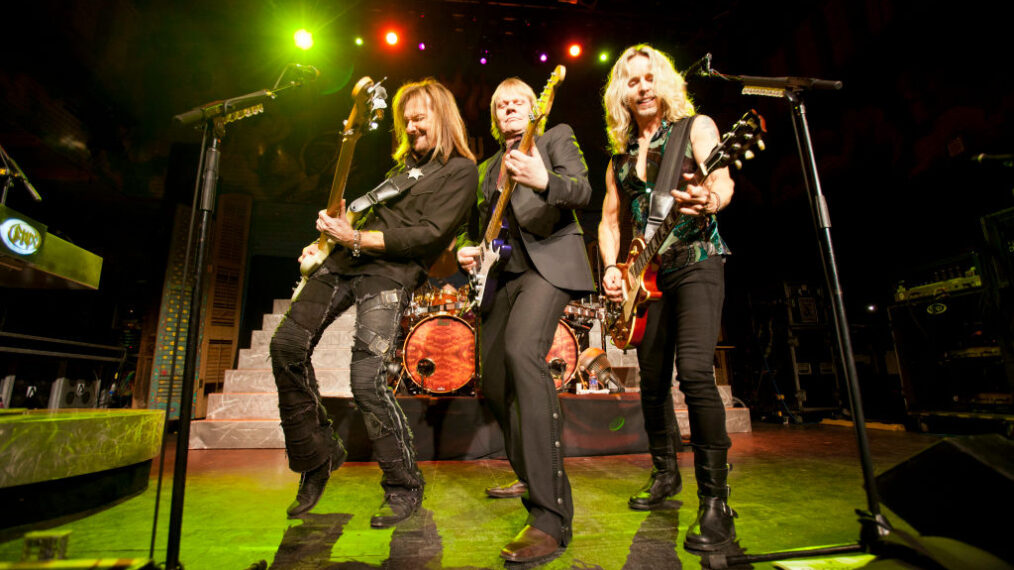
Rock touring is not making a “comeback”—it has never left. Rather, touring has transcended its traditional role as marketing for album sales and become the primary revenue engine for the music industry. While streaming now accounts for 69% of recorded music revenue, it generates mere fractions of a cent per stream, rendering it economically inefficient for artists. By contrast, touring and live performance generate 91-96% of top artists’ income, with touring remaining the only viable path to sustainable musician earnings. The global live music market is valued at $30-42 billion and is projected to reach $42-44 billion by 2033, with compound annual growth rates of 6-8%. More significantly, the market structure has undergone radical bifurcation: mega-stadium tours are thriving, with average per-show grosses up 29% and attendance records being shattered; mid-tier touring and traditional touring circuits are collapsing; festival landscapes are consolidating ruthlessly. The Oasis reunion tour in 2025 exemplifies this dynamic: 14 million ticket requests for 1.4 million available seats, generating $405 million in gross revenue, demonstrating that rock audiences—far from diminishing in the streaming era—are more passionate and wealthier than ever. For rock artists, touring is no longer supplementary income—it is the business model. For venues and promoters, the digital era has not disrupted touring; it has fundamentally restructured it into a winner-take-most market where superstars thrive and mid-tier performers face existential pressure.
1. The Economics: Why Touring Dominates Artist Income
The Streaming Revenue Collapse
The emergence of streaming as the dominant recorded music distribution format (69% of global music revenue) has created a fundamental economic crisis for artists. While streaming revenue in aggregate grew, per-artist payouts collapsed. Spotify pays artists approximately $0.003-0.005 per stream on average, meaning an artist requires 4,000-5,000 streams to earn the equivalent of one concert ticket sale.
This disparity explains why even the most-streamed artists derive minimal income from streaming. Drake, despite being the #1 streamed artist globally in 2018, derived only approximately 33% of his total income from streaming, with the remainder coming from touring and other revenue sources. Bruce Springsteen, a veteran artist, earned 96% of his income from touring and less than 2% from streaming. Taylor Swift, despite her dominance in both streaming and touring, earned 91% of her $99.6 million total annual earnings from touring in 2018, with streaming contributing less than 6%.
This pattern holds for independent musicians as well. A Reddit survey of touring musicians revealed that artists performing 200-250 shows annually earn $200-$800 per show (averaging $400), totaling $80,000-$200,000+ annually from live performance plus merchandise, while earning only $5,000 annually from streaming across their projects. This represents a 16-40x earning difference: one concert ticket sale equals 4,000+ streams in economic value.
The fundamental issue is platform economics. Streaming platforms retain 70% of revenue; rights holders (labels, publishers, management) extract their shares; what remains for the artist is typically 10-20% of platform revenue. Given streaming’s massive volume but microscopic per-item payout, the economic model for individual artists is broken.
Touring: The Recession-Resistant Revenue Engine
By contrast, touring generates substantially larger and more reliable revenue. A stadium show with 55,000 attendees at average ticket prices of $216 generates approximately $12 million in gross revenue (before costs). Top-tier artists capture 70-85% of this after promoting, security, and venue costs. Even after paying the touring band, production crew, and equipment costs, artists pocket $2-3 million per stadium show.
The scalability is extraordinary. A megá-tour performing 50 stadium shows generates $100-150 million in gross touring revenue. For comparison, the same artist would require 50 billion streams to earn equivalent revenue via Spotify—an impossible figure for all but the absolute top artists. This fundamental economics is driving a structural inversion: recorded music is becoming marketing for touring rather than the inverse.
The stability is equally important. Ticket sales are predictable; streaming is subject to algorithmic changes, platform payouts, and market saturation. An artist who books a 50-show stadium tour knows, with 95%+ certainty, that it will generate $100+ million in revenue. Streaming revenue is speculative and declining as market saturation sets in.
2. The Market Structure: Bifurcation and Winner-Take-Most Dynamics
Stadium Dominance and Venue Consolidation
The touring market has undergone radical consolidation in 2024-2025. Stadium shows (capacity >30,000) experienced 19% growth in average gross revenues, reaching $7.11 million per concert, while ticket sales averaged 56,272 attendees per show—11% higher than 2024. Simultaneously, mid-size venues (15,000-30,000 capacity arenas) experienced 4.7% decline in average gross, and small clubs (<750 capacity) declined 5.3% year-over-year, with three-year declines of 18.6%.
This reflects a structural shift: touring artists are moving up-market toward stadiums. The average per-show gross for the Top 100 touring artists reached $2.42 million in Q3 2025, a 29.4% increase year-over-year, indicating that artists are shifting from multi-night arena runs to stadium shows. Artists like Coldplay are moving to stadiums; traditional arena touring is being squeezed from both directions (below by stadium tours with better per-show economics, above by smaller clubs offering more intimate experiences).
The consequence is venue hollowing: thousands of mid-capacity venues (5,000-15,000 seats) that formed the backbone of touring infrastructure are now financially stressed. These venues depend on 100-150 shows annually to break even; reduced touring activity has left them with 30-50% occupancy rates. Many are consolidating, downgrading (converting to smaller capacities), or closing entirely.
The Festival Collapse
The festival landscape is experiencing existential crisis. Festival cancellations doubled from 2023 to 2024 in the UK alone. Research indicates that two-thirds of music festivals ran deficits in 2024 despite maintaining attendance, due to surging artist fees (+30-40% since 2020) and elevated insurance, staffing, and production costs. The economic model of mid-tier festivals (10,000-40,000 attendees, $30-60 ticket prices) has become unsustainable.
The festivals surviving are those at extreme ends: mega-festivals (100,000+) like Glastonbury and Coachella that can command premium pricing and sponsor support, and niche festivals (5,000-10,000 attendees) with highly specialized lineups that attract devoted audiences. Generic, middle-market festivals have essentially ceased to be viable.
Market Bifurcation: Winners and Losers
The 2026 touring landscape is divided into clear winners and losers:
Winners:
- Mega-stadium tours (Taylor Swift, Coldplay, Beyoncé, The Weeknd): Per-show averages $7-10 million; stadiums booked 1-3 years in advance; demand dramatically exceeds supply
- VIP and premium experiences: Hospitality-led touring commanding 2-6 night residencies in major cities; 20-30% revenue premium over general admission
- Emerging artists with loyal fanbases: Artists with 50K-500K core fans performing 30-50 shows annually in mid-size venues; sustainable margins if tour routing is optimized
- Nostalgia-driven reunions: Oasis, Guns N’ Roses reunion template; pent-up demand from aging fan base with discretionary income
Losers:
- Mid-tier touring artists: Artists performing 75-150 annual shows in 3,000-8,000 capacity venues; facing margin compression from rising costs (artist fees, insurance, labor up 30-40% since 2020)
- Generic festivals: Weak concepts unable to differentiate; operating at deficits; being consolidated or cancelled
- Small club circuits: Venues <2,000 capacity experiencing 18-20% revenue decline; viable only for emerging artists or legacy acts in niche markets
3. Rock’s Specific Dynamics: The Reunion Effect and Nostalgia Economics
The Oasis Phenomenon: Blueprint for Rock’s Future
The Oasis Live ’25 reunion tour provided a template for understanding rock touring’s current state. The band, which disbanded in 2009, announced a 2025 reunion on August 27, 2024 (two days before the 30th anniversary of their debut album “Definitely Maybe”). The ticket announcement generated unprecedented demand: 14 million ticket requests for just 1.4 million available seats across UK and Ireland dates—a 10:1 oversubscription ratio.
The economic impact was immediate and staggering. Spotify reported a 690% increase in daily Oasis song streams following the reunion announcement. Hotel prices in host cities like Dublin tripled within days. Initial ticket projections estimated $526 million in sales alone. The actual tour generated $405 million in gross revenue with 2 million attendees, making it the second highest-grossing tour of 2025, behind only Taylor Swift.
The Oasis reunion validated a critical insight: rock audiences never disappeared; they aged, gained disposable income, and accumulated nostalgia. The average Oasis fan in 2025 is 40-50 years old, representing the peak earning years for professional workers. A $200-400 ticket to see Oasis in their prime feels like a reasonable nostalgia investment for a middle-aged fan, in a way it might not have seemed ten years ago when these fans had young children and mortgage constraints.
Rock Tours Amid Streaming Stagnation
Rock touring has experienced a paradox: streaming growth decelerated in 2024-2025, with music industry growth stalling, yet touring revenues accelerated. This inversion reflects touring’s fundamental advantage: live performance is an experience good that cannot be duplicated by streaming, while recorded music can be consumed infinitely for marginal cost.
Rock specifically is uniquely positioned for touring dominance. Rock is a genre with aging fanbases (classic rock fans aged 40-70, arena rock fans aged 30-50). These demographics have high disposable income but declining tolerance for discovery via algorithms. They want to hear the songs they grew up with, performed live by the artists who created them. This creates predictable, reliable touring demand.
Led Zeppelin reunion speculation (ongoing rumors in 2025) demonstrates this dynamic. Despite no official announcement, the mere possibility of a Led Zeppelin tour generated significant online engagement and tour speculation articles. This contrasts with contemporary rock bands, where a tour announcement generates excitement but not cultural obsession. The gap between nostalgia-driven reunion demand and contemporary rock touring demand is dramatic.
4. Digital Integration: Enhancing Rather Than Replacing Live Performance
Streaming as Tour Marketing Engine
The streaming era has fundamentally changed touring’s role. Previously, touring was marketing for album sales. Today, the relationship inverts: streaming is marketing for touring. Artists use streaming playlists, TikTok virality, YouTube content, and algorithm-driven discovery to build audiences, then convert those audiences into ticket purchasers.
This inversion is explicit in artist and label strategy. A rising artist might:
- Release singles and build streaming playlist presence (goal: 1-5 million listeners)
- Leverage streaming momentum to drive social media following (TikTok, Instagram trending)
- Announce tour dates and convert streaming audience into ticket buyers
- Execute tours; recoup investment from touring revenue and merchandise
Streaming payouts in this model are immaterial—fractions of a cent. The streaming platform’s value is audience discovery and marketplace exposure, not direct revenue.
Digital Experiences and Hybrid Models
The post-pandemic era has normalized hybrid touring models combining physical and digital attendance. Platforms like YouTube, TikTok, and emerging concert streaming services enable artists to monetize beyond physical venue capacity through:
- Live-streamed concert ticket sales: Fans unable to attend physically pay reduced ticket prices for digital access
- Exclusive behind-the-scenes content: Tour documentation, rehearsal footage, interview content monetized via streaming platforms or artist channels
- AR/VR integration: Interactive in-venue experiences (wristbands, mobile apps) that enhance physical attendance and create shareable moments for social media
Coldplay’s Music of the Spheres tour exemplifies this integration: kinetic dance floors generating electricity, interactive LED wristbands distributed to every attendee, and extensive social media integration driving recorded content from concert footage. These technologies are not replacing live attendance; they are enhancing it and extending its reach through digital amplification.
The result is tour economics that extend beyond the venue: a stadium show generates $7-10 million in direct ticket revenue, plus 10-20 million social media impressions (video clips, TikTok highlights, Instagram reels) that drive future ticket sales and merchandise revenue. The tour becomes a content production engine generating monetizable assets beyond the physical event.
5. The Ticket Economics: Price Escalation and Accessibility Crisis
Dynamic Pricing and Controversy
A defining feature of 2025 touring has been aggressive dynamic pricing, which adjusts ticket prices in real-time based on demand. For high-demand shows, this mechanism has resulted in extraordinary prices: Bruce Springsteen fans encountered tickets priced over $5,000 each on the Ticketmaster platform during initial sales in 2022. While such extremes are rare, dynamic pricing routinely increases ticket prices from standard $100-150 to $200-300+ for major artists.
The industry argument for dynamic pricing is straightforward: it maximizes revenue, reflecting true demand value for scarce concert experiences. Venues and artists note that concert production costs (security, labor, equipment) have increased 30-40% since 2020, requiring higher revenue per show to maintain profitability. Dynamic pricing enables this without a percentage ticket price increase.
However, dynamic pricing generates significant consumer friction. The Oasis ticket on-sale in August 2024 was marred by dynamic pricing controversy, with users reporting long wait times, bot problems, limited purchasing windows, and high reseller fees. The experience highlighted the tension between revenue maximization and fan accessibility.
Scalping and Secondary Market Inflation
Secondary market dynamics have transformed ticket accessibility. Reseller platforms (StubHub, Ticketmaster resale, etc.) often capture 30-50% of available inventory through automated purchasing, then resell at 2-3x original prices. The Oasis tour exemplified this: tickets listed on reseller platforms for $3-5x the $50-200 original price within hours of release.
This creates a three-tier market: face-value tickets (scarce, sold through official channels), reseller market (3-5x face value), and gray market (unregulated, potentially fraudulent). Most fans end up purchasing from resellers, enriching scalpers rather than artists or venues.
The consequence is pricing accessibility crisis: a family of four attending a Coldplay or Oasis show now costs $1,600-2,400 (tickets + parking + food + merchandise), putting live concert attendance out of reach for middle-class consumers. Touring has become a luxury experience, accessible primarily to affluent demographics.
The Demand Still Exists (But at Premium Prices)
Paradoxically, despite high prices and accessibility friction, tickets continue to sell out. The Oasis reunion sold out stadium capacity across 30+ dates in minutes. Coldplay’s Music of the Spheres tour added 10+ dates due to demand. Taylor Swift’s Eras Tour was the highest-grossing tour ever.
This suggests that accessibility crisis has not suppressed demand—it has redistributed purchasing power toward higher-income audiences while excluding price-sensitive fans. The market is not shrinking; it is consolidating around affluent demographics able to absorb premium ticket prices.
6. The Future: 2026-2030 Outlook
Continued Bifurcation
The touring market will continue bifurcating through 2026-2030. Stadium touring by A-list acts will expand: the Top 100 touring artists will increasingly favor stadium over arena shows; more artists will add stadium dates to tours. Simultaneously, arena touring will contract as artists migrate up and venues face margin pressure.
Mid-tier touring and festival attendance will stabilize at lower levels. Industry participants will acknowledge that 2023 represented peak post-pandemic touring volume; 2024-2026 represents normalization to sustainable levels. Some venues and festivals will permanently close; others will consolidate or downsize.
Rock-Specific Strength
Rock will remain strong in touring despite weak contemporary rock streaming. Nostalgia-driven reunions (aging boomer and Gen-X audiences with disposable income) will continue as a touring category. Classic rock and legacy acts will outperform contemporary rock artists in touring revenue.
The Led Zeppelin reunion speculation that persisted throughout 2025 reflects this dynamic. If/when Led Zeppelin reunites (which appears unlikely given age and health factors, but ongoing rumors suggest the possibility), the tour would be one of the largest revenue events in sports/entertainment history, potentially eclipsing even Taylor Swift’s Eras Tour. This exemplifies how rock’s aging fanbase’s disposable income creates unprecedented touring opportunities.
Technology Integration
Touring will increasingly integrate augmented reality, virtual reality, and interactive experiences as standard rather than novelty. Artists will deploy AR wristbands, mobile apps enabling seat-specific experiences, and real-time social media integration as baseline production elements.
Hybrid physical-digital touring will become standard for megá-tours, with live-streaming generating 10-20% of ticket revenue for high-profile shows. This extends tour monetization and addresses accessibility concerns for fans unable to attend physically.
Sustainability Pressures
Touring’s environmental impact—carbon emissions from transportation, waste generation, energy consumption—will face increasing scrutiny. Early-mover artists (Coldplay, Radiohead, etc.) are already implementing carbon-offset programs and sustainable touring practices. By 2030, carbon-neutral touring will be expected for premium-tier artists, creating a competitive marketing advantage and potentially representing additional costs that restrict touring to highest-revenue acts.
7. Implications for Different Stakeholders
For Rock Musicians and Bands
The strategic imperative is unambiguous: touring is not supplementary—it is the primary business model. Musicians must optimize for tour revenue by:
- Building loyal fanbases capable of filling venues repeatedly
- Executing efficient tour routing (multiple-night stands in major markets rather than isolated single shows)
- Investing in memorable live experiences (production, special guests, setlist variation)
- Monetizing touring through merchandise, VIP packages, and premium experiences
For emerging rock artists, this means accepting lower margins than 2010s-era touring (rising costs have not been offset by ticket price increases for mid-tier acts). Touring becomes viable only through either: (1) achieving A-list status enabling stadium shows, or (2) building niche fanbases enabling profitable smaller-venue touring with manageable cost structures.
For Venues and Promoters
The consolidation trend creates both opportunity and threat. Venues optimizing for stadium or large-arena capacity (15,000+) are thriving. Mid-capacity venues face existential pressure and must adapt by either: (1) investing in premium experiences (hospitality, VIP lounges, experiential production), (2) specializing in specific genres or artist types, or (3) consolidating/downsizing.
Live Nation’s continued dominance reflects this dynamic: the largest promoter can aggregate demand across multiple cities, negotiate lower artist fees through volume, and execute tours at scale that mid-tier promoters cannot match. This consolidation will likely accelerate.
For Streaming Platforms
Streaming’s role will continue evolving toward marketing function rather than primary revenue source. Platforms compete for artist attention and label partnership by:
- Optimizing playlist placement that drives tour ticket awareness
- Investing in artist tools (analytics, audience insights, tour promotion features)
- Creating original content (behind-the-scenes, interview series) that drives touring interest
However, platforms face long-term pressure as artists recognize that direct-to-fan revenue (touring, merchandise, NFT communities) provides superior economics to platform payouts.
Conclusion: The Inversion Is Complete
Rock touring is not making a comeback—it has transcended its historical role and become the primary revenue engine for music. The streaming era, paradoxically, has accelerated this inversion. As recorded music revenue plummeted to microscopic per-stream payouts, touring became not optional but existential for artist survival.
The market has bifurcated sharply: mega-stadium tours are thriving with unprecedented per-show averages; mid-tier touring faces margin compression; small venues are declining. Rock specifically benefits from aging affluent fanbases willing to pay premium prices for nostalgia-driven experiences and legendary artists.
The Oasis reunion tour of 2025 exemplified this dynamic: 10:1 oversubscription, $405 million in gross revenue, and validation that rock audiences remain passionate and economically powerful. Whether Led Zeppelin reunites or not is less important than recognizing that the possibility alone generates cultural obsession.
For musicians, venues, and industry participants, the message is clear: touring is not a supplementary business to recorded music. It is the business. The digital era did not kill touring—it made touring essential.